Learn how to use “the more… the more” in IELTS Writing. This guide explains the grammar in simple terms and gives clear examples for Task 1 and Task 2 essays, plus practice exercises to improve your score.
Grammar
Advanced prepositions for IELTS

In this lesson you’ll learn 101 Prepositional Phrases that you can use in the IELTS test, with tips and advice on how to remember them.
IELTS Writing Task 2: Do you agree or disagree?
In this lesson you’ll learn 3 ways to structure a ‘Do you agree or disagree?’ question about whether facts or skills should be taught at school and university. It includes 2 model answers.
IELTS Listening: uncountable nouns in gapfill questions
In this IELTS Listening Lesson, you’ll learn about how uncountable nouns are used in gapfill questions so you will recognise them more easily.
IELTS Task 2 essays: formal writing (hedging)

Hedging is a really important feature of academic writing.
But what is hedging and how can you use it in your Task 2 essays?
This lesson teaches you 10 ways to ‘hedge’ and includes an interactive practise exercise.
Word formation: Words ending in -able or -ible
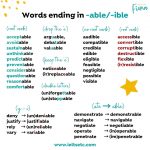
Learn when to use -able and -ible with simple spelling patterns, examples and practice for IELTS word formation.
IELTS Vocab: affect and effect
The difference between ‘affect’ and ‘effect’ and how to use them accurately in IELTS Writing and Speaking.
How to use ‘despite’ and ‘in spite of’ in IELTS Writing Task 2

There are very important grammatical differences between ‘despite’ and ‘in spite of’ and ‘although’. Learn how to use them corrrectly here (with video and interactive practice).
‘Not only, but also’ and other forms of inversion

‘Not only, but also’ is a powerful structure that you can use in both Writing and Speaking. This lesson reviews the grammar of inversion caused by this structure.
How to use ‘the former’ and ‘the latter’ in IELTS
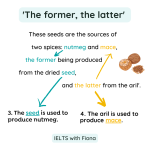
Learn how to use ‘the former’ and ‘the latter’ to make your writing more formal and academic and to avoid repetition.
How to use ‘twice as much/many’

‘Double’, ‘twofold’ and ‘twice as much’ or ‘twice as many’ are advanced strucures used on IELTS Writing Task 1 but they’re easy to learn.
How to use ‘although’ to show concession in IELTS Writing

Learn how to use ‘although’, ‘though’ and ‘even though’ to produce an outstanding Task 2 conclusion.
Coherence and Cohesion for IELTS Writing Task 2
Coherence and Cohesion (C&C) are one of the IELTS Writing Band Descriptors and are worth 25% of the marks. This lesson will help you understand what they mean and show you how to improve your C&C score.
Stuck at the same IELTS score? How to break through a plateau

Stuck at the same IELTS Band Score? Find out why your score has stopped improving and what you can do differently to break through your IELTS plateau and reach your target score.
‘-ing’ vs infinitive: 10 simple rules
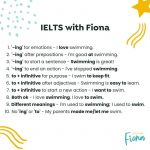
Ing or infinitive verbs have a complex set of rules, but here are some tips on how to master their use.
IELTS complex sentences and how to make your writing more complex

Complex sentences are important for a Band 7 score, but it’s more important to be clear. This lesson shows you how to do both.
Grammar for IELTS: will vs going to
If you learnt in school that ‘will’ is the Future Tense, do this lesson about ways of talking about future PLANS.
IELTS Writing Task 1 map: how to describe ‘before and after’ diagrams

The IELTS Writing Task 1 floor plan and ‘before and after’ maps require a little thought and preparation if you’ve never done one before. Here are some guidelines.
Grammar for IELTS: Modals of Deduction (Listening about Ireland)

Modals of deduction can help you answer questions in both the IELTS Reading and Listening tests. This lesson will show you how.
The best songs to help you learn English
A list of the best songs to help you learn English grammar, vocabulary and pronunciation

